Ease the feeling of muscle soreness
Cold-water immersion may reduce perceived soreness after strenuous exercise. The response varies with the activity, timing and person.
Recover / Nilambur
Supervised cold-water immersion is an optional recovery session. It may ease perceived muscle soreness after exercise for some people.
Benefits & purpose
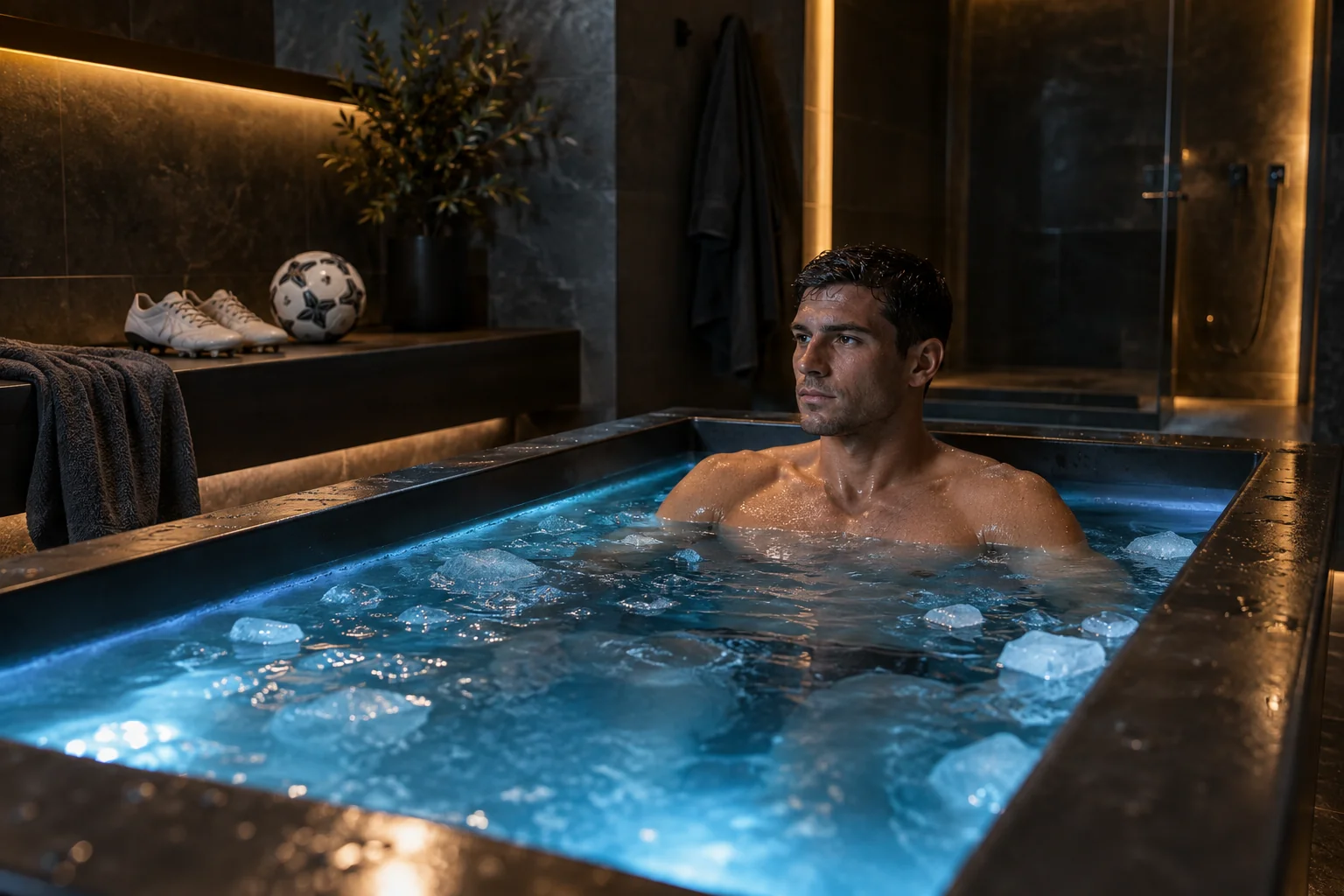
After a demanding session, cold-water immersion may help some people feel less sore. At AMADO, your training schedule and comfort guide whether it belongs in your recovery routine.
Cold-water immersion may reduce perceived soreness after strenuous exercise. The response varies with the activity, timing and person.
Some athletes use immersion during busy training or competition periods. Feeling better does not necessarily mean that injured tissue has healed.
AMADO’s planned session includes a suitability check, controlled entry and comfort monitoring, with the option to stop at any time.
Benefits are mainly about short-term recovery and perceived soreness. An ice bath is not a treatment for a new injury or a guaranteed performance boost.
Further reading: Cleveland Clinic guidance.
Your session at AMADO
Tell us what you trained, when you last exercised and what comes next. The team will discuss whether cold immersion fits that plan, including the timing around strength training. A session is optional; sleep, nutrition and sensible training remain central to recovery.
Adults considering cold exposure after a health and training-goal check.
The team explains entry, exposure, exit and warming up. Duration and temperature are selected individually; you can stop at any point.
Cold exposure can stress breathing and circulation. Heart conditions, blood-pressure problems, diabetes, reduced sensation or pregnancy need medical advice before use. It is not essential for recovery and timing can matter for strength goals.