Restore / Physiotherapy
Move with more
confidence.
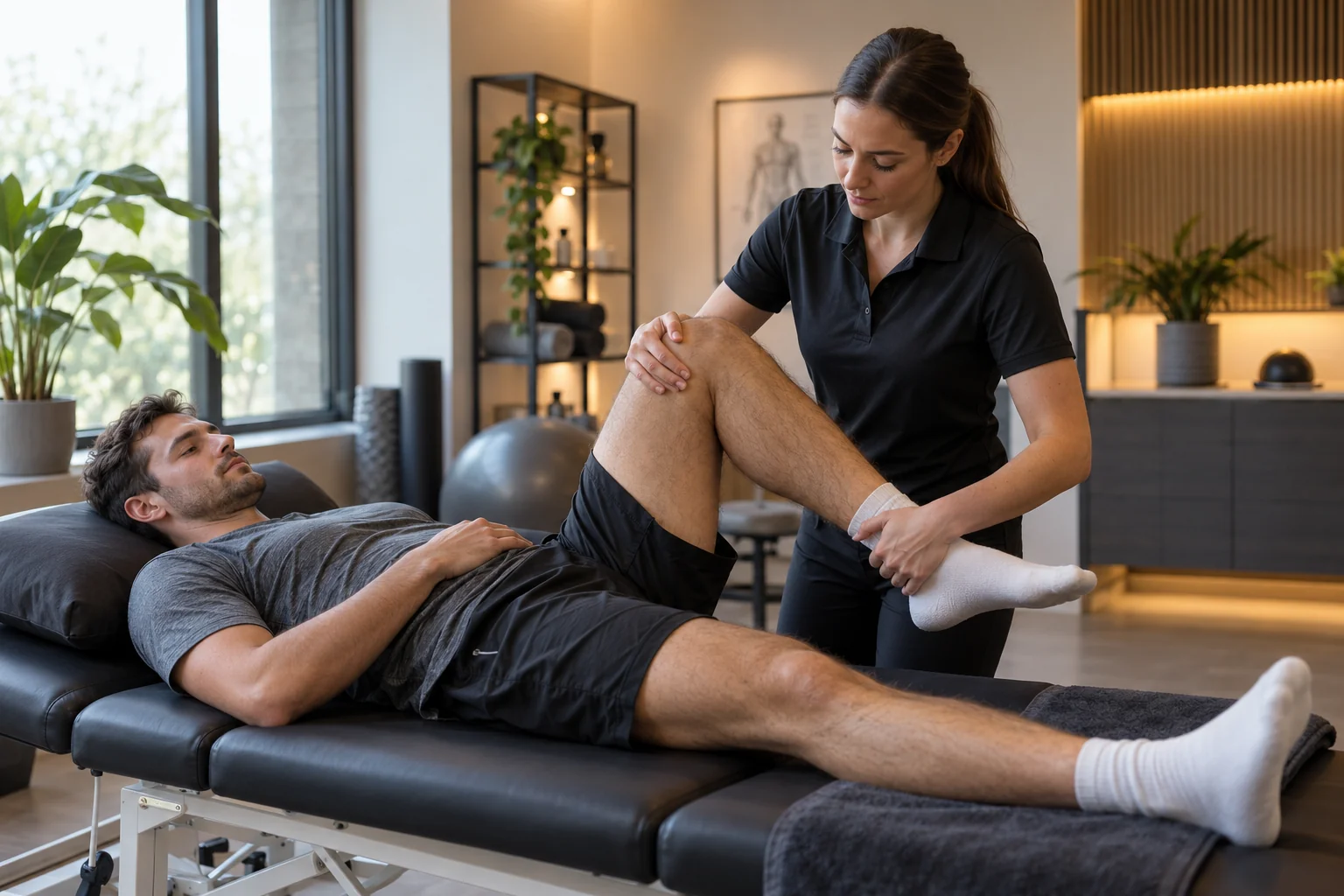
Assessment-led physiotherapy and rehabilitation at AMADO Physiotherapy & Sports Recovery Centre in Nilambur. Your goals and clinical assessment guide the care plan. Opening soon.
Explore the menu
Understand your
service choices.
Select a service to read its purpose, suitability and what your visit involves. Ask the branch about availability and pricing.
Physiotherapy & Rehabilitation
Pain Management & Orthopaedic Physiotherapy
View details +
Assessment and rehabilitation for muscle, joint and movement concerns, with a focus on function and manageable progress.
- Who it may suit
- People with back, neck, shoulder or knee pain, joint stiffness or musculoskeletal limitations.
- What to expect
- The physiotherapist asks about your history, assesses relevant movement and discusses a plan with exercises, guidance and review points.
- Before your visit
- Care follows assessment and, where needed, medical or surgical guidance. New, severe or unexplained symptoms may require medical evaluation first.
Sports Injury Rehabilitation
View details +
A staged rehabilitation plan works towards the strength, control and activity demands needed for your sport.
- Who it may suit
- People recovering from football, gym or running injuries after appropriate assessment.
- What to expect
- The physiotherapist asks about your history, assesses relevant movement and discusses a plan with exercises, guidance and review points.
- Before your visit
- Care follows assessment and, where needed, medical or surgical guidance. New, severe or unexplained symptoms may require medical evaluation first.
Post-operative Rehabilitation
View details +
Progressive movement and exercise follow the operation-specific instructions and recovery stage.
- Who it may suit
- People recovering after surgery who have the relevant rehabilitation guidance.
- What to expect
- The physiotherapist asks about your history, assesses relevant movement and discusses a plan with exercises, guidance and review points.
- Before your visit
- Care follows assessment and, where needed, medical or surgical guidance. New, severe or unexplained symptoms may require medical evaluation first.
Senior Citizen Rehabilitation
View details +
Exercises and movement practice are adapted to daily activities, confidence, strength and balance.
- Who it may suit
- Older adults who need support with everyday mobility.
- What to expect
- The physiotherapist asks about your history, assesses relevant movement and discusses a plan with exercises, guidance and review points.
- Before your visit
- Care follows assessment and, where needed, medical or surgical guidance. New, severe or unexplained symptoms may require medical evaluation first.
General Fitness & Mobility Rehabilitation
View details +
A guided programme addresses movement limits and builds capacity for everyday physical activity.
- Who it may suit
- People returning to activity after inactivity or reduced mobility.
- What to expect
- The physiotherapist asks about your history, assesses relevant movement and discusses a plan with exercises, guidance and review points.
- Before your visit
- Care follows assessment and, where needed, medical or surgical guidance. New, severe or unexplained symptoms may require medical evaluation first.
Return-to-play Assessment
View details +
Functional checks and sport-specific tasks help inform the next stage of training and return to play.
- Who it may suit
- Athletes progressing through rehabilitation; the assessment is not a guarantee against future injury.
- What to expect
- The physiotherapist asks about your history, assesses relevant movement and discusses a plan with exercises, guidance and review points.
- Before your visit
- Care follows assessment and, where needed, medical or surgical guidance. New, severe or unexplained symptoms may require medical evaluation first.
Injury Prevention Guidance
View details +
Movement habits, workload and exercise choices are reviewed to support better preparation and training decisions.
- Who it may suit
- Active people seeking practical guidance around training demands.
- What to expect
- The physiotherapist asks about your history, assesses relevant movement and discusses a plan with exercises, guidance and review points.
- Before your visit
- Care follows assessment and, where needed, medical or surgical guidance. New, severe or unexplained symptoms may require medical evaluation first.
Common Concerns
Back & Neck Pain
View details +
Care explores how symptoms affect posture, movement and daily tasks, then builds an appropriate activity plan.
- Who it may suit
- People with back or neck discomfort that needs assessment.
- What to expect
- Assessment identifies the relevant movement limits and a suitable rehabilitation approach before exercises or other care are selected.
- Before your visit
- A symptom name alone cannot establish a diagnosis. Treatment and progress differ between people.
Shoulder Pain & Frozen Shoulder
View details +
Assessment-led care supports a gradual approach to shoulder movement and function within the person’s tolerance.
- Who it may suit
- People with shoulder stiffness or difficulty reaching and lifting.
- What to expect
- Assessment identifies the relevant movement limits and a suitable rehabilitation approach before exercises or other care are selected.
- Before your visit
- A symptom name alone cannot establish a diagnosis. Treatment and progress differ between people.
Knee Pain & Arthritis-related Stiffness
View details +
Rehabilitation focuses on movement, strength and practical tasks such as walking or using stairs.
- Who it may suit
- People with knee discomfort or arthritis-related mobility limitations.
- What to expect
- Assessment identifies the relevant movement limits and a suitable rehabilitation approach before exercises or other care are selected.
- Before your visit
- A symptom name alone cannot establish a diagnosis. Treatment and progress differ between people.
Sciatica-related Symptoms
View details +
An assessment considers leg and back symptoms and helps determine suitable activity or the need for medical referral.
- Who it may suit
- People with suspected nerve-related leg symptoms.
- What to expect
- Assessment identifies the relevant movement limits and a suitable rehabilitation approach before exercises or other care are selected.
- Before your visit
- A symptom name alone cannot establish a diagnosis. Treatment and progress differ between people.
Muscle Strain & Ligament Injury
View details +
A progressive plan supports the transition from limited movement to strength and task-specific activity.
- Who it may suit
- People recovering from a diagnosed strain or ligament injury.
- What to expect
- Assessment identifies the relevant movement limits and a suitable rehabilitation approach before exercises or other care are selected.
- Before your visit
- A symptom name alone cannot establish a diagnosis. Treatment and progress differ between people.
Post-fracture Rehabilitation
View details +
Movement and strengthening are progressed once healing status and medical restrictions permit.
- Who it may suit
- People rebuilding function after a fracture.
- What to expect
- Assessment identifies the relevant movement limits and a suitable rehabilitation approach before exercises or other care are selected.
- Before your visit
- A symptom name alone cannot establish a diagnosis. Treatment and progress differ between people.
Ankle Sprain Rehabilitation
View details +
A staged programme can include mobility, balance and strength work matched to walking or sporting demands.
- Who it may suit
- People recovering from ankle injury after assessment.
- What to expect
- Assessment identifies the relevant movement limits and a suitable rehabilitation approach before exercises or other care are selected.
- Before your visit
- A symptom name alone cannot establish a diagnosis. Treatment and progress differ between people.
ACL Rehabilitation
View details +
Knee rehabilitation is planned around surgical or non-surgical management, recovery stage and activity goals.
- Who it may suit
- People following an ACL injury or reconstruction.
- What to expect
- Assessment identifies the relevant movement limits and a suitable rehabilitation approach before exercises or other care are selected.
- Before your visit
- A symptom name alone cannot establish a diagnosis. Treatment and progress differ between people.
Hamstring & Groin Rehabilitation
View details +
Progressive exercise and activity planning focus on the demands of running, changing direction and sport.
- Who it may suit
- Athletes or active people with assessed hamstring or groin concerns.
- What to expect
- Assessment identifies the relevant movement limits and a suitable rehabilitation approach before exercises or other care are selected.
- Before your visit
- A symptom name alone cannot establish a diagnosis. Treatment and progress differ between people.
Running & Gym Injury Rehabilitation
View details +
Training demands and symptoms are reviewed together to plan a gradual return to activity.
- Who it may suit
- Runners and gym users needing a rehabilitation plan.
- What to expect
- Assessment identifies the relevant movement limits and a suitable rehabilitation approach before exercises or other care are selected.
- Before your visit
- A symptom name alone cannot establish a diagnosis. Treatment and progress differ between people.
Further reading: NHS guide to physiotherapy. Session choices depend on your individual assessment.
Questions & answers
Before your visit
What should I bring to my first physiotherapy visit?
+
Bring relevant medical reports, imaging or referral information if you have them, and wear clothing suitable for checking the affected movement. Tell the team about medicines, previous treatment, activity goals and any restrictions.